

Escom seeks Mera consideration on higher tariff increase
Electricity Supply Corporation of Malawi (Escom) has said it plans to renegotiate with Malawi Energy Regulatory Authority (Mera) for its proposed 60 percent power tariff increase application which was reduced by the regulator to 31.8 percent spread over four years with 20 percent effective October 1 2018.
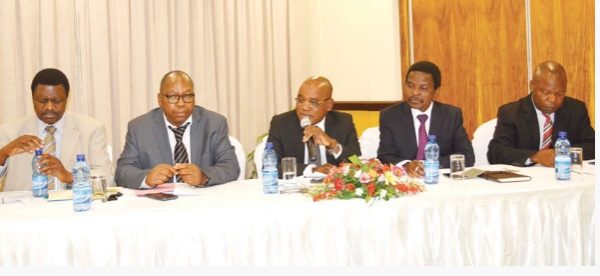
Escom chief executive officer Allexon Chiwaya told a news conference in Blantyre on Tuesday the approved 31.8 percent that Mera approved would not enable the power utility to address the challenges it is facing.
Chiwaya said the cost of buying electricity remains high and said to attain the ambitions of improving service delivery, the power utility need to “have more money and the money would only come from the tariffs.”
He said: “As part of the review by Mera, sums included in the previous base tariff [2014- 18] were deducted. A sum of K11 billion was provided for in the 2014-2018 for this project [Malawi-Mozambique interconnector] and this is the amount that was to have been deducted, leaving K46 billion in the 2018-2022 base tariff. However, [Mera] deducted a further K20 billion leaving K26 billion in the approved projects for the 2014-2018 base tariff.”
Escom also proposed to upgrade the Nanjoka Substation which is to support the Lilongwe Water Project and Salima Cotton Factory as well as the Eastern Transmission Backbone which is to support the enhancement of supply to the Northern Region were dropped.
The projects were estimated at a K4.1 billion cost. However, Mera turned down the proposal.
The 132 Kv Eastern Backbone transmission line from Nkhoma via Salima to Chintheche substations was also included in the base tariff submission to Mera at an estimated cost of K43.1 billion.
The project involved the replacement of obsolete wooden poles with steel poles to avoid power interruption in the Northern Region which came about due to regular maintenance.
Escom boss they said will re-engage Mera on the matter.
Mera’s decision to trim tariff hike to 31.8 percent followed nationwide public consultations on the application by Escom for the 60 percent increase from an average K73 per kilowatt hour (kWh) to K117 per kWh within a period of four years.
But in his remarks at the news conference, Escom commercial and customer services manager, Wiseman Kabwazi, said with the new tariffs, it would remain relatively expensive to produce electricity.
“Our current position is to go back to era and seek consideration,” said Kabwazi.
He said the current approved increase will assist Escom “in moving towards a cost effective tariff “but that it would not be “as cost effective.”
Mera announced it approved an average increase from the current K73.23 to K88.02 for 2018/19, to K94.54 in 2019/20, to K91.98 in 2020/21 and finally K101 in 2021/22.
Consumers are now paying an average 20 percent more per kilowatt hour for 2018/19.
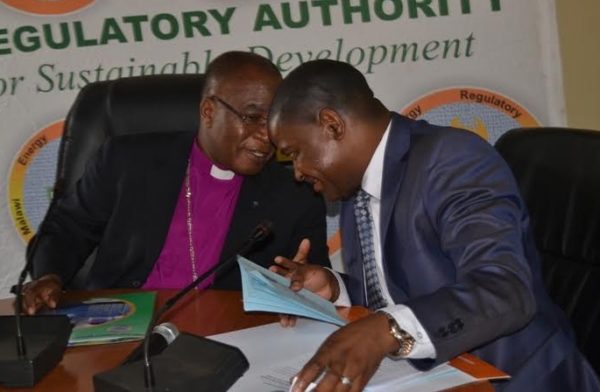
Mera board chairperson Bishop Joseph Bvumbwe said the 31.8 percent increase would translate to an average tariff of K95.15/kWh against K117.64/kWh which Escom requested.
The regulator said moved to protect the consumer by approving the annual increase based on the extra kilowatt per hour that Escom offers its customers.
Mera chief executive officer Collins Magalasi said the regulator approved the revenue increase to Escom on the promise that it would provide the power that consumers are paying extra for annually.
Escom also told reporters a new tarrif plan dubbed ‘lifeline tarrif; that stipiulates that n customers buy the first 50 electricity units at a base rate of K47. 50 per unit and any additional unit after 50 mark will see the domestic consumer buy a K63.76 representing a 30 percent increase.
Follow and Subscribe Nyasa TV :