

Frontline workers at Liwonde National Park expose corruption and poor working conditions
In a startling revelation, frontline workers and junior employees at Liwonde National Park, one of Malawi’s premier wildlife reserves, are reportedly mobilizing for a potential for a big action to address mounting grievances.
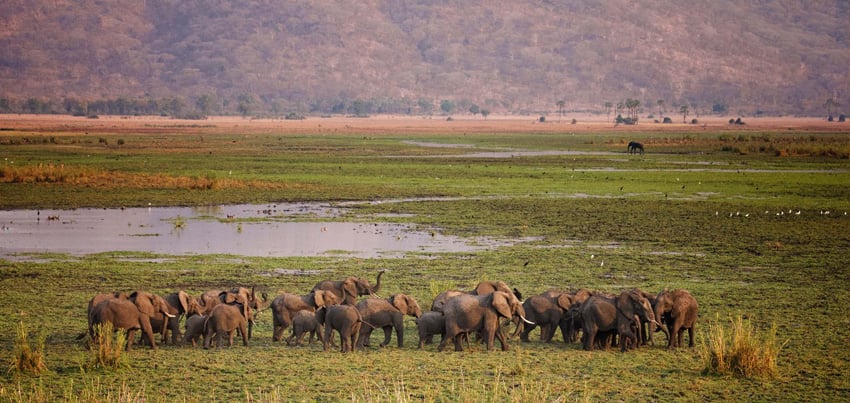
The unfolding situation sheds light on deep-rooted issues of corruption, inadequate resources, high levels of poaching, and deplorable working conditions that threaten both ranger morale and conservation efforts within the park.
Allegations of financial misappropriation by park management are central to the rangers’ concerns. They claim that funds intended for critical anti-poaching operations are being siphoned off, severely limiting their ability to carry out effective patrols.
“We are facing immense challenges because we lack the necessary resources to do our jobs effectively,” one ranger stated, speaking on condition of anonymity. “Without proper funding and support, we cannot protect the wildlife as we should.”
Rangers report severe reductions to their risk allowances, diminishing what is already a meager wage.
“Instead of receiving the MK15,000 we are entitled to, we only get MK8,000 as our daily risk allowance,” another ranger explained.
“The rest goes into the pockets of those who don’t even patrol the park. It’s frustrating to see our dedication overlooked and our basic needs neglected.”
This dissatisfaction is compounded by the stark contrast in support between Liwonde and other African Parks-managed reserves. While rangers in Majete Wildlife Reserve and Nkhotakota Wildlife Reserve reportedly receive allowances adequate to cover living expenses, those at Liwonde feel abandoned.
“We often work in dangerous conditions, yet our management doesn’t seem to care about our well-being,” one ranger lamented.
“It’s demotivating and makes us feel as though our efforts are futile.” Moreover, the lack of basic necessities, such as allowances for electricity and water, has created a challenging work environment that heightens the risk of increased poaching.
“The connection between poor working conditions for rangers and the rising threat of poaching cannot be overstated,” asserted another ranger who has faced poachers on multiple occasions.
“Our passion for conservation is being tested daily. How can we protect wildlife when we struggle just to survive?”
A renowned wildlife campaigner who opted for anonymity , a respected wildlife activist, corroborated these claims, pointing to pervasive corruption as a key factor in the systemic failure to support rangers.
“In environments where internal corruption is rampant, the potential for complicity in poaching activities increases,” he told Nyasa Times.
“Allegations of resource abuse and corruption within park management create an atmosphere of distrust and disillusionment among rangers, who may feel their efforts are in vain if financial benefits are siphoned off by higher-ups.”
Calls for an investigation into management practices at Liwonde are resonating throughout the ranger community, reflecting a growing demand for accountability.
“The rangers’ request for oversight underscores the urgent need to address these systemic issues and restore integrity within the park’s management,” the activist emphasized.
According to the rangers, communication has been initiated with African Parks’ headquarters in South Africa, urging them to take the complaints seriously.
“If they ignore us, we are prepared to take drastic measures, including a sit-in to bring attention to our struggles,” one ranger warned.
Among other concerns, the rangers state that they have petitioned African Parks headquarters to institute a formal investigation into the park management’s use of financial resources, the working conditions of frontline staff, and the alleged theft of park property, including vehicle spare parts.
They have recommended that anyone found guilty be dismissed and replaced with a leadership team committed to prioritizing both wildlife protection and the welfare of frontline employees.
The rangers have further suggested that senior park officials should undertake frontline patrol duties if they believe the work to be straightforward, a pointed reminder of the realities faced daily by those on the ground.
“If our management thinks it’s easy to patrol and protect the park, they should experience it firsthand,” another ranger asserted.
“Only then will they understand what we go through.”
Environmental and resource management research consistently demonstrates that effective governance is critical to mitigating poaching and safeguarding wildlife.
The wildlife campaigner mphasized that when rangers are equipped with adequate resources and protected from corruption, they can focus on their essential conservation role rather than being hampered by systemic inefficiencies and abuses.
“The crisis at Liwonde National Park reflects broader systemic challenges facing wildlife conservation efforts across Malawi.
Poor working conditions, corruption, and resource abuse create fertile ground for poaching to flourish.
Addressing these challenges through improved management practices, enhanced support for rangers, and a firm commitment to accountability is vital for the sustainability of Malawi’s national parks and the preservation of the country’s invaluable wildlife heritage.”
Efforts to reach the park’s manager, Shaibu Kadewere, were unsuccessful, as he was reportedly on leave.
As a long-term management partner of the Malawi Government, African Parks was expected to set the benchmark for professional, transparent, and accountable conservation governance in Malawi.
The organization’s arrival in the country was widely heralded as a transformative moment—an opportunity to stabilize protected areas, strengthen anti-poaching capacity, and restore institutional integrity within park management structures.
Yet, according to the rangers, Liwonde now appears to be falling prey to the very challenges African Parks was mandated to address.
Allegations of financial opacity, resource diversion, and declining frontline support stand in stark contrast to the organization’s stated commitment to best-practice conservation management.
African Parks has built its reputation across the continent on structured governance frameworks, performance-based management, and rigorous oversight mechanisms. In theory, such systems are designed to insulate conservation areas from precisely the types of dysfunction now alleged at Liwonde.
Conservation analysts note that when a flagship reserve begins to exhibit systemic strain, it risks undermining broader confidence in the public-private partnership model that African Parks represents.
Malawi’s protected areas were entrusted to external management in part to break cycles of institutional weakness and to demonstrate that well-governed parks can simultaneously deliver biodiversity protection and staff welfare.
The situation, therefore, carries implications beyond a single reserve. Liwonde was meant to stand as proof that professionalized park management could reverse decline, deter poaching, and uplift frontline personnel. Instead, rangers now argue that the gap between policy and practice is widening.
For many within the conservation community, the unfolding tensions represent a critical point. Either corrective measures are taken swiftly, or the credibility of a model designed to reform conservation management risks failure.
Reacting to the development, African Parks which is managing the Liwonde National Park has confirmed of the financial inconsistencies concerns at Liwonde , and instituted a financial investigation on the matter.
“African Parks is aware of the concerns that have been raised regarding financial inconsistencies and welcomes the opportunity to provide clarification.
“An internal finance audit has already been initiated and is currently in progress. No final report has been issued, and it would be premature to comment until the audit is complete.” Said Catherine Munjoma, the Marketing and Communications Director for African Parks .
She disclosed that the African Parks management has drafted a standard Human Resource policy for all parks in Malawi to ensure consistency and to respond to the economic changes experienced in recent years.
“This review is intended to strengthen transparency, standardize procedures, and improve support for staff across the Malawi parks,” she said .
Munjoma stated that Liwonde National Park has seen significant improvements over the past 12 years,including reduction of the human – wildlife conflict Human–wildlife conflict through the construction of a second elephant‑deterrent fence, and the security of the main perimeter fence has been enhanced through strengthened collaboration with surrounding communities.
“Liwonde National Park is in a stronger position today than it was 18 months ago. Protection and law enforcement capacity have improved, community development initiatives have expanded, and tourism is on a positive trajectory,” she said.
However, Brighton Kumchedwa, the director of the Department of National Parks and Wildlife (DNPW) argues that there is more need to be done by the Liwonde National Park considering that five lions were killed within the 18 months period of improvement claimed by the Africa Parks.
“To start with , we are aware of the financial management incompetence at Liwonde National Park and an internal audit being carried out , the African Parks reported to us about the development, and we will make our recommendations after at their findings report.
“However, we want to advice the to improve their enforcement team to fully combat poaching and prevent similar incidences where five lions have lost ,” Kunchedwa advised.
Follow and Subscribe Nyasa TV :