

Malawi political tension rises to threaten stability, economy
The Civil Society Organisations (CSOs) nationwide demonstrations organised by the Human Rights Defenders Coalition (HRDC), to demand the stepping down of Malawi Electoral Commission (MEC) Chairperson Jane Ansah for the mismanagement of May 21 tripartite elections has sent a clear message that unless she resigns there will be ‘no peace’ in the land.

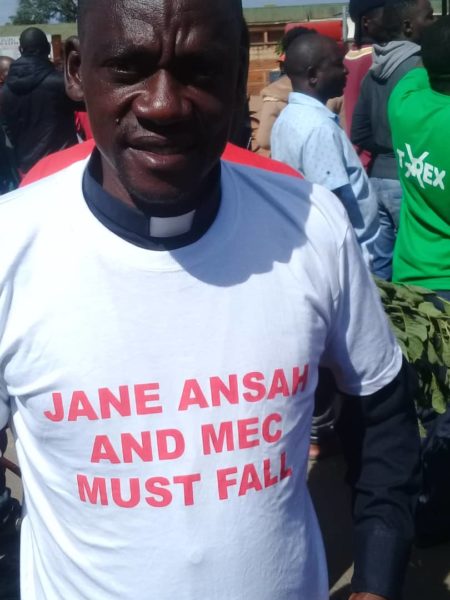

They charge that she should accept the blame for accepting election results that were tampered with tippex which propelled the incumbent Peter Mutharika to win the elections. Civil society organisations, backed by opposition Malawi Congress Party and UTM Party, have vowed to explore other options until she and other commissioners resign.
The demand for Ansah to resign has added to the already soaring political temperature that has engulfed the country following disputed election results which the opposition is challenging in court. The opposition has refused to accept Mutharika as a legitimate president, saying elections were rigged.
Incidentally, the political tension is adversely affecting the country. The local currency, Kwacha, which has been stable for several years, hovering between K715-K730 to a dollar, has depreciated to all time low to over K800 per dollar despite the tobacco market being at the apex.
Malawi was scheduled to host an International Trade Fair in the commercial city of Blantyre next month, but the event has been postponed because the political climate is unfavourable. Businesses have also been affected. They are not operating optimally. Demonstrations are happening almost daily, forcing businesses to close their premises to protect their valuables from being looted or vandalised.
Some workers opt to participate in the demonstrations to exercise their democrat right. Unwittingly, man-labour hours are lost and production has suffered. The overall effect is that the economy will take a knock the longer it takes to resolve the impasse.
While the disputed elections have roots in the altering of results using tippex, Malawi needs to reform her electoral laws so that the president is elected by half of the population rather than just a simple majority. Leaders have exploited ethnicity and regionalism strategy to win the election because the first-past-the-post only requires a simple majority. For example, Mutharika only won with 38%, meaning that the majority of the voters, 62%, rejected him.
A proposal to amend the electoral law to provide for 50+1 was shot down by the ruling Democratic Progressive Party. They believed that mathematically they could still win elections. The Southern Region from which the party draw its largest support, could be exploited on ethic and regional lines and emerge victors. The strategy has worked. Both Mutharika and DPP have been overwhelmingly voted in the South Region where they have banged most votes.
However, this will pose a huge challenge for Mutharika to govern effectively. Already the opposition has scooped all positions in parliament: speaker, deputy speaker and second speaker. The ‘winner takes all’ system is producing a president who does not enjoy the support of the country because the majority did not vote for him.
While 50 + 1 does not guarantee that development will be shared equitably among all the regions, it is a stamp of approval that the president enjoys widespread popular majority.
Follow and Subscribe Nyasa TV :