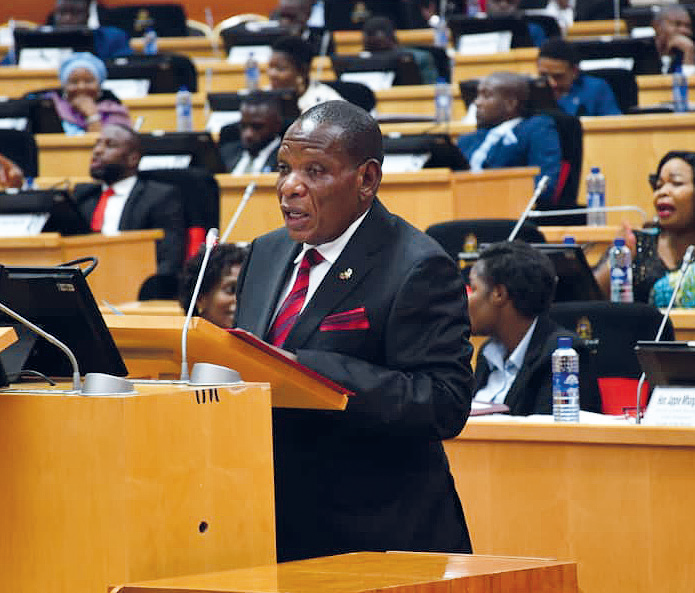
Finance Minister Joseph Mwanamvekha has sought to calm growing public anxiety over the possibility of another painful currency devaluation, insisting that fresh negotiations between Malawi and the International Monetary Fund (IMF) will not include any discussions on weakening the kwacha.
Mwanamveka: Suffer now and enjoy later
Mwanamvekha’s assurance comes as an IMF mission is expected in Malawi from June 9 to June 18 for critical talks aimed at securing a new Extended Credit Facility (ECF) arrangement — a concessional loan programme designed for low-income countries battling severe economic instability.
The high-stakes negotiations are taking place at a time Malawi’s economy remains under intense pressure from soaring inflation, foreign exchange shortages, rising public debt, shrinking investor confidence and persistent commodity price increases that continue to suffocate ordinary citizens.
But amid widespread speculation that the IMF could demand another sharp devaluation of the kwacha as part of any rescue package, Mwanamvekha says government will not entertain such discussions.
“There will be no discussion on devaluation,” the minister declared, maintaining that the upcoming talks will focus strictly on policies aimed at restoring macroeconomic stability.
The reassurance is likely aimed at containing panic among Malawians and businesses already battered by previous currency adjustments which triggered massive price hikes, erosion of purchasing power and increased cost of living.
The impending negotiations also carry enormous political and economic significance because they come after Malawi suffered the embarrassment of seeing two successive IMF-supported programmes collapse within a few years.
An earlier IMF programme was cancelled in 2020, while another Extended Credit Facility arrangement technically failed in May 2025 after government allegedly struggled to meet key reform and fiscal discipline targets required under the agreement.
The repeated collapse of IMF programmes has raised serious questions about Malawi’s economic management, policy consistency and government’s ability to implement difficult but necessary reforms.
Economic analysts say the failure of successive programmes has damaged the country’s credibility with international lenders and cooperating partners, further tightening pressure on the already fragile economy.
Without a functioning IMF programme, Malawi risks continued difficulties in accessing international balance-of-payment support, donor confidence and broader external financing desperately needed to stabilize the economy and ease forex shortages.
The upcoming talks are therefore being viewed as a make-or-break moment for the country’s economic recovery efforts.
However, while government insists devaluation is off the table, economists warn that the IMF traditionally pushes for exchange rate reforms in countries where official currency values significantly differ from parallel market realities.
Malawi has for years struggled with a widening gap between official and black-market exchange rates, a situation critics argue distorts trade, fuels arbitrage and worsens forex scarcity.
Any indication of possible devaluation discussions has historically triggered panic buying, price speculation and market instability, making the issue politically explosive.
Meanwhile, ordinary Malawians remain anxious over the outcome of the talks as the country continues battling high prices of essential goods, unstable fuel supplies, unemployment and declining household incomes.
For many citizens, the IMF negotiations represent more than just technical economic discussions — they are directly tied to whether the cost of living will worsen further in the coming months.
As the June 9 negotiations approach, pressure is mounting on the Mwanamvekha-led economic team to convince the IMF that Malawi is capable of implementing credible reforms after years of missed targets, policy reversals and failed recovery promises.
Follow and Subscribe Nyasa TV :
Follow us in Twitter
One reply on ““No Devaluation Talks,” Says Mwanamvekha as Malawi Heads Into Crucial IMF Rescue Negotiations After Two Failed Programmes”