

Ombudsman Cries Foul as Government Ministries Ignore Binding Rulings Amid K300 Million Funding Crisis
Government ministries, departments and agencies (MDAs) are increasingly ignoring legally binding rulings from the Office of the Ombudsman, exposing deep cracks in Malawi’s public accountability system and weakening citizens’ access to administrative justice.
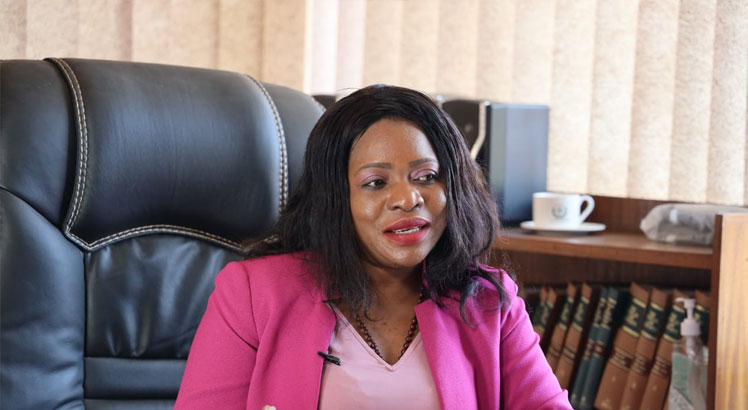
Appearing before Parliament’s Public Accounts Committee (PAC) in Lilongwe yesterday, Ombudsman Grace Malera revealed that out of 22 determinations issued by her office during the 2025/26 financial year ending March 31, 2026, only nine were complied with.
The alarming compliance rate paints a troubling picture of public institutions allegedly disregarding constitutional oversight mechanisms with little consequence.
Malera attributed the situation to weak enforcement provisions, bureaucratic inefficiencies and poor appreciation of the Ombudsman’s mandate among MDAs.
“Our approach is to work collaboratively with MDAs so that they understand we are not being antagonistic, but helping strengthen administrative justice and service delivery,” she said.
Established under Section 123 of the Constitution, the Office of the Ombudsman investigates complaints of maladministration in public institutions and issues remedial determinations which are legally binding.
Despite its constitutional authority, the institution appears to be struggling to compel compliance.
Malera disclosed that her office handled 544 cases from 4,899 complaints received in 2025 and conducted 135 inquiries, while the Hospital Ombudsman Office separately received 14,971 complaints and concluded 10,029 cases.
However, beyond resistance from public institutions, the Ombudsman’s office is also battling a severe financial crisis threatening its operations.
Malera told the committee that the institution is facing a K300 million operational budget deficit and owes suppliers K166 million, a development she said has damaged the office’s credibility and disrupted service delivery.
The funding crisis has become so severe that the office is reportedly struggling to secure office space in Blantyre following relocation challenges involving the Malawi Electoral Commission, with some landlords allegedly unwilling to lease premises over fears of unpaid bills.
Despite the financial and operational hurdles, the office has launched two major systemic investigations.
One probe is examining efficiency and service delivery at the Department of Immigration and Citizenship Services, with findings expected next month, while another is investigating governance, transparency and accountability failures in Malawi’s mining sector.
Malera said the mining sector inquiry, budgeted at approximately K280 million, was triggered by concerns over opaque investor contract awards and weak grievance redress mechanisms.
PAC vice-chairperson Joshua Malango called for urgent legal reforms to strengthen the Ombudsman’s authority.
“If we do not strengthen the legislation governing this office, it will remain in an awkward position because it must oversee the same government it depends on for funding,” he warned.
Legal experts have since described the low compliance rate as evidence of deeper structural weaknesses within Malawi’s governance system.
University of Malawi law lecturer Benadetta Malunga observed that the Ombudsman lacks coercive powers to enforce its determinations, while courts are equally unable to execute them on the office’s behalf.
“Most determinations are directive in nature, meaning compliance largely depends on the willingness of the affected institution,” she explained.
Private practice lawyer Benedicto Kondowe said some public institutions treat Ombudsman rulings as mere advice instead of binding decisions, warning that weak sanctions have fuelled a culture of impunity in the public sector.
Office of the President and Cabinet Principal Secretary for Good Governance Reinford Mwangonde acknowledged the seriousness of the matter, saying government is considering ways of strengthening compliance mechanisms while addressing the office’s operational and financial challenges.
“The Office of the Ombudsman plays an indispensable role in maintaining public sector accountability and ensuring that Malawian citizens receive fair administrative justice,” said Mwangonde.
Treasury spokesperson Williams Banda also confirmed that government is engaging the Ombudsman’s office on possible solutions to its financial difficulties.
The Ombudsman’s office has in recent years handled several high-profile cases, including ordering the Ministry of Justice and Constitutional Affairs to restart the recruitment process for the Anti-Corruption Bureau director general position and disqualifying candidates Hillary Chilomba and Oscar Taulo for allegedly failing to meet legal requirements.
In 2021, the office also investigated the recruitment of the then Malawi Energy Regulatory Authority chief executive officer.
Follow and Subscribe Nyasa TV :