

OPINION: Creck Hardware Deserves Fairness, Not Trial by Public Opinion
Recent public debate surrounding ESCOM’s procurement process has placed Creck Hardware at the center of a controversy that, by all available accounts, is not actually about the company itself.
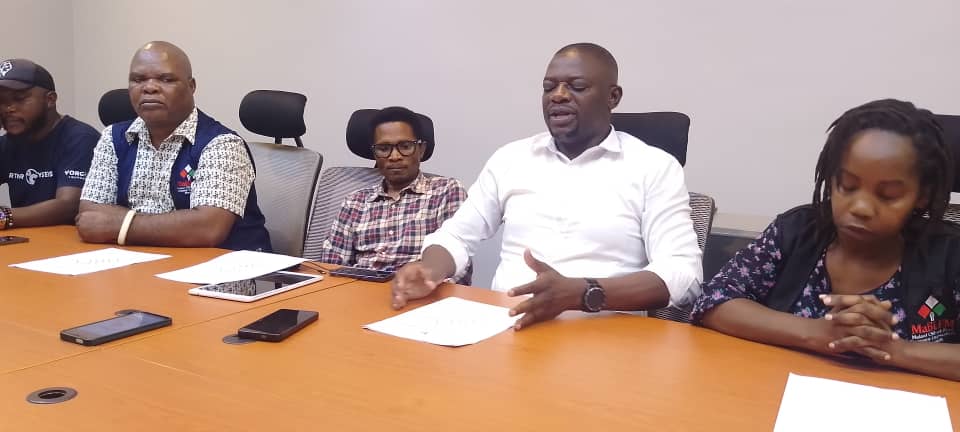
Since documents emerged alleging political interference in ESCOM procurement decisions, sections of the public have rushed to portray Creck Hardware as a beneficiary of wrongdoing. Yet a careful reading of the facts reveals that there is currently no public evidence proving that Creck Hardware violated any procurement law, engaged in corruption, or improperly influenced the tender process.
Even the Civil Society Organisations that raised concerns about the procurement process have made their position clear. Their concern is not whether Creck Hardware deserved the contract, but whether procurement procedures were subjected to political interference. They explicitly state that they do not take any position on whether Creck Hardware or any other company should have been awarded the contract.
This distinction is important.
In any competitive tender process, companies submit bids and expect those bids to be evaluated on merit according to established procurement rules. If a company participates in a lawful procurement process and emerges among successful bidders after technical and financial evaluations, that fact alone cannot be treated as evidence of wrongdoing.
Public procurement systems are designed to assess suppliers based on objective criteria such as price competitiveness, technical capability, delivery capacity, compliance requirements, and value for money. Companies that participate in such processes do so with the expectation that the rules will be applied fairly and consistently.
If questions have arisen regarding ESCOM’s procurement decisions, those questions should be directed toward the institutions responsible for managing and overseeing the process. The central issue, as highlighted by civil society organizations, is whether procurement outcomes were influenced by external factors after evaluation processes had already been completed.
Indeed, the CSOs argue that the issue before the nation is not whether a particular company won or lost a contract, but whether procurement decisions were made according to the law.
That principle cuts both ways.
Just as no company should receive preferential treatment, no company should be unfairly condemned without evidence. If Creck Hardware participated in a procurement process established by law, submitted its bid, and underwent evaluation by the relevant authorities, then it deserves the same protection of due process that applies to every citizen and business operating in Malawi.
Prematurely labeling companies as corrupt without proof carries serious consequences. It damages reputations, undermines investor confidence, discourages local entrepreneurship, and creates uncertainty for businesses seeking to participate in government tenders. Such outcomes can ultimately weaken rather than strengthen public confidence in procurement systems.
If investigations determine that procurement laws were violated, appropriate action should be taken against those responsible. However, until such findings are made, allegations should not be mistaken for evidence and suspicion should not be treated as guilt.
Malawi’s commitment to the rule of law requires consistency. The same principles of fairness, transparency, and due process that civil society organizations are demanding from public institutions should also apply to private companies that find themselves caught in public controversy.
The debate should therefore focus on facts, evidence, and lawful procedures rather than assumptions.
Creck Hardware, like any other bidder, deserves to be judged not by speculation but by evidence. Until credible findings establish otherwise, fairness demands that the company be presumed to have acted lawfully and be allowed the opportunity to defend its reputation.
In a democratic society governed by the rule of law, accountability is essential. But so too is fairness. One cannot exist meaningfully without the other.
Follow and Subscribe Nyasa TV :