

Shock as Govt Appoints Murder Suspect Taulo as CEO for SFFRFM
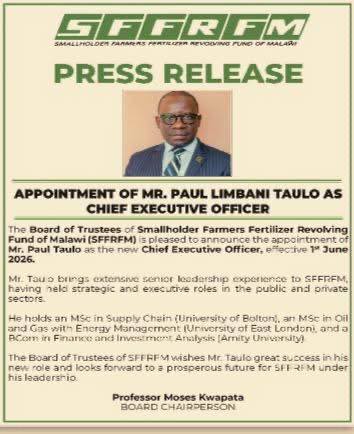
There is growing outrage and disbelief following the appointment of murder suspect Paul Limbani Taulo as Chief Executive Officer of the Smallholder Farmers Fertilizer Revolving Fund of Malawi (SFFRFM), a critical state institution responsible for managing fertilizer support for millions of vulnerable smallholder farmers.
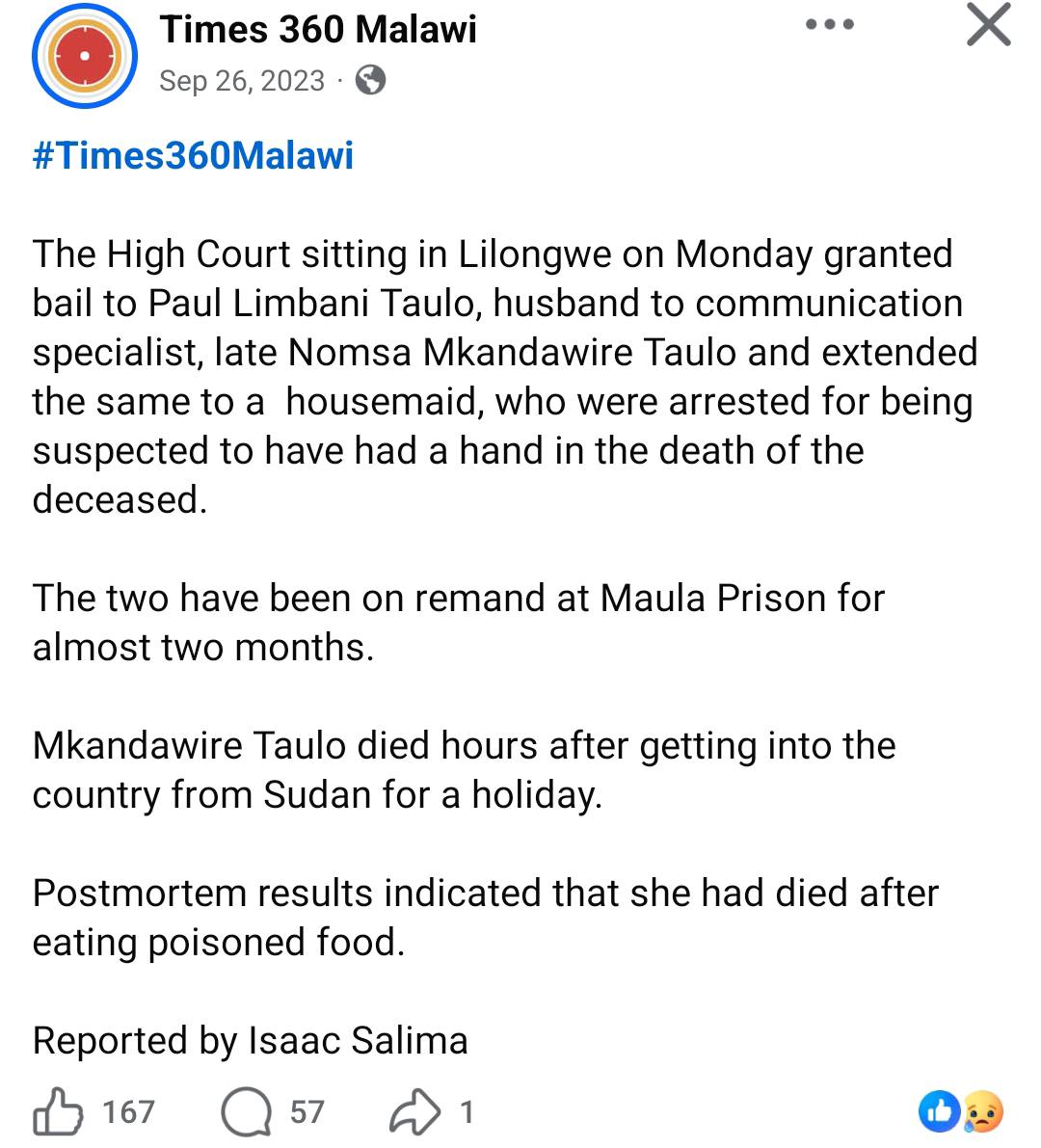
The appointment, announced by the Board of Trustees under Professor Moses Kwapata, has been justified on grounds of experience and academic qualifications. But to many Malawians, that explanation is no longer sufficient. It is being viewed as a dangerous example of how public institutions are increasingly ignoring ethical considerations, public perception, and basic governance sensitivity when making high-level appointments.
At the centre of the controversy is the fact that Mr Taulo is currently facing ongoing criminal proceedings in a 2023 murder case connected to the death of his spouse. While the matter is still before the courts and no final judgment has been made, the seriousness of the allegations alone has triggered national concern about whether such a figure should be placed at the helm of a sensitive public institution handling billions in fertilizer-related public resources.
This is not a minor administrative appointment. SFFRFM is one of the most strategically important agricultural institutions in Malawi, sitting at the heart of fertilizer financing, distribution systems, and support for smallholder farmers who already struggle under the weight of high input costs and economic pressure. Leadership of such an institution demands not only technical competence, but also unimpeachable public confidence and moral credibility.
Instead, the country is now confronted with a decision that has raised more questions than answers. How was this individual vetted? What standards were applied? And how did an appointment of this magnitude pass through governance structures without triggering stronger scrutiny of reputational risk and public trust implications?
The silence from relevant authorities has only made the situation worse. Neither the Ministry of Agriculture nor the Board of Trustees has provided a detailed explanation of the vetting process or the reasoning behind the decision. In the absence of clarity, public concern is growing into open anger, with many questioning whether governance systems are being applied consistently or selectively depending on position and influence.
For many citizens, this is not just about one appointment. It is about a deeper and more troubling pattern where accountability appears flexible, and where institutions entrusted with public resources appear increasingly disconnected from the expectations of transparency and ethical leadership.
SFFRFM directly affects national food security and farmer livelihoods. Any perception that its leadership is politically shielded, poorly vetted, or insensitive to public trust is not a minor issue—it is a direct threat to confidence in the entire agricultural support system.
Malawians are now demanding answers, not explanations. They want to know whether due process was followed, whether risk assessments were conducted, and whether anyone in authority is willing to take responsibility for a decision that has already shaken public confidence in one of the country’s most important state funds.
Follow and Subscribe Nyasa TV :