

Under the Microscope: The Chilima conundrum, but has the hour come?
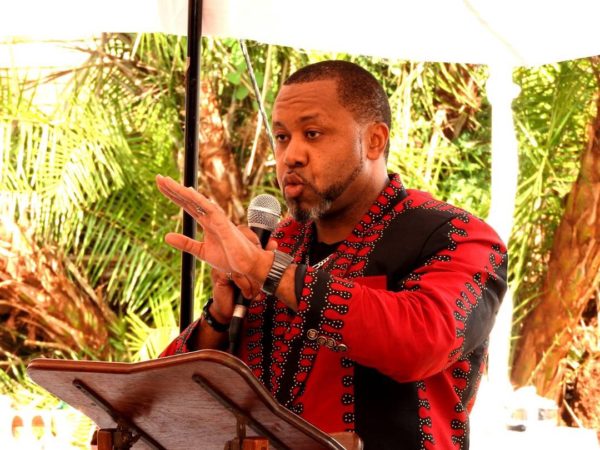
Having set that matter aside, my attention and I believe that of most Malawians, is to see whether his proposal for moving this country forward is viable.
From what he says, he seems to imply that the challenges facing this country cannot be solved by changing or maintaining ruling political parties because the problems are actually perpetrated by political parties, themselves!
According to him, a movement of the people, like the Transformation Movement that he ascribes to, is the only way to save Malawi.
My understanding is that the proposed Movement is supposed to offer a new leadership mechanism that will undo vices that inherent in the traditional political structures.
I am not very familiar with the movement but it is no secret that political parties in Malawi are built and exist surviving under total capture of founders and funders.
Specifically, nepotism continues to thrive in these parties as the founders’ funders’ try to sustain their grip on the structures mostly for purposes of protecting themselves from consequences of corruption and abuse of power committed during their reign.
This, in turn only leads to more and more corruption by the anointed replacements who, in turn, go on to protect themselves through more nepotism and so the cycle continues.
In the final analysis, the only that grows out of this – exponentially for that matter – is corruption. Granted, political parties cannot exist without someone founding and/or funding them, but its very nature, democracy demands openness, transparency and all other attendant virtues.
While founders are naturally disclosed by default, political parties ought to exercise total openness on funding. This was a deliberate design of democratic mechanics appearing as an intelligible foresight and I will tell you why:
The secret space between political parties and their private funders is one of the areas most vulnerable to the corruptive influence of money. Ordinary Malawians have no access to information regarding the private individuals, corporations and foreign governments (if any) that fund and influence our political parties.
What we do know is that such funding shapes our politics and the decisions political parties make on behalf of the people. Secrecy breeds corruption and the secrecy surrounding sources of private funding of political parties is no exception.
When these parties get voted into power, the will of the nation represented by voters gets outweighed by the bank balances of the secret financiers whose interests normally come into conflict with our own.
A ruling political party gets into power on the back of its supporters and it needs to keep rewarding its rank and file with continuous tokens of appreciation for the rest of its term if it is to remain in power.
But because a political party is a NINJAS (No Income No Jobs or Assets), the only way to support rank and file is by taking from the state kitty through fraudulent means, popular amongst them being false invoicing and demanding big payouts in exchange for government contractors such as supplying food packs to the Malawi Police.
While the DPP has taken this to another level. The very nature of politics of patronage, where a party has to take care of the people that voted it into power, will affect each and every political party that will come into power – be it MCP, PP, Aford. It is the nature of the beast – you reward the people who put you into power.
So if that is the nature of things, what hope is there for Malawi? Well, I have one answer for you: 1993. Yes, 1993. Cliché as it may sound, 1993 taught us that even Malawians who are considered to be peaceful (which is polite for docile) do get fed up and when they do, they cannot be stopped.
In short, 1993 showed us that when Malawians are fed up, they have a tendency for losing their fear of pangas and pistols and will take their power back and get things done on their own terms.
As things stand, today, any well-meaning Malawian will tell that they are fed up not with just with DPP but with the way government and government come in with promises only to use the trust they are given at the polls to enrich themselves. And as years go by, ruling parties have grown bolder in their effrontery, boasting about being untouchables, showing off their ill-gotten wealth and spitting in the face of voters.
As a result, most Malawians feel helpless and are practically disillusioned at the political system that allows the very same people they entrust with their vote to hold them hostage. And that was exactly how Malawians felt about the one-party rule. And then 1993 happened.
There was no warning. No years of planning. No army or weapons. No Napoleon or Ceasar to lead them. It was just ordinary people led by ordinary leaders –a little known (but a giant of a man) Chakufwa Chihana, ordinary Catholic Bishops followed by ordinary politicians – Bakili Muluzi and many others. Just ordinary people. But within a year a system that had been built over a period of 30 years and was propped by an efficient and ruthless police came tumbling down by screams of ordinary people.
I am not saying that 1993 is here again. I am just saying that if it is, there will be no lightning or thunder. If it is here it will not be moved by a special person. It will be moved by a voice, calling for well-meaning Malawians to step forward and save their country. And if it is here, time will not be a factor.
And I wish it is here. Because if it is not here then we, as a people are doomed. Personally, I do not think Malawi can stand another 5 years of looting.
There may be very little left but it is time that we took back our power and entrust it into the hands of only those who have the capacity and nerve to demolish the entrenched system of abuse and build one that will stand the test of time.
Just as it was the case in 1993, the time has come for people to withdraw the power they gave to politicians; give to a new set of hands with a clear mandate to clean up the mess once and for all and ensure that politicians should never again have a chance to abuse the people’s trust.
So for me, it does not matter who makes the call whether it is Chilima or you the reader or even myself (why not?) I will come.
I have voted 4 times since 1993 but this time I want my vote to mean something, to change a direction. I do not want to vote for a party or a person, I want to vote for me; I want to vote for my future.
And it is for that reason and that reason alone that I will give Chilima a chance and listen to what he has to say. If the hour has come, I will know. Because, you see, I know the feeling. I was there in 1993.