

Delegates differ on proposal for Malawi parliament to use vernacular languages for deliberations
Delegates to Electoral Reforms Review Conference in Lilongwe failed to reach an agreement on whether members of Parliament (MPs) should be freed from the bondage of using English as the official language for transacting their business in the National Assembly.
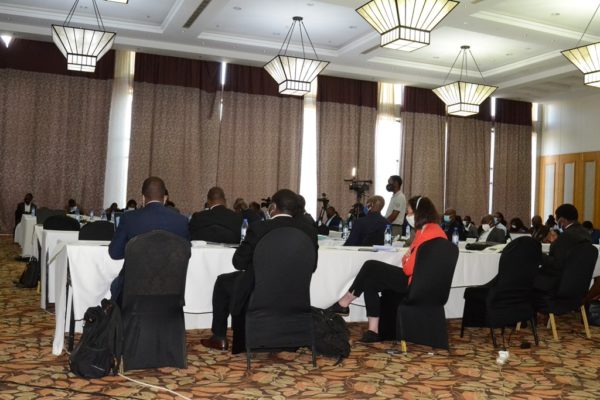
The National Initiative for Civic Education (NICE) Public Trust organized the conference with financial assistance from the Open Society Initiative for Southern Africa (OSISA) and the European Union (EU) to review electoral law reforms and chart a path for their adoption before the next general election in 2025.
One of the items on the agenda was for the delegates to debate on whether time had come for Malawi to replace English with a local one to improve the quality of deliberations in Parliament as being agitated by some concerned voters and democracy enthusiasts.
In their considered view, the deteriorating quality of parliamentary deliberations is a result of language barrier as the majority of the MPs are barely educated and, therefore, cannot contribute and comprehend what is being discussed in the National Assembly.
But other delegates expressed reservations with the use of other languages besides English in the House, saying parliamentary deliberations are serious business that should not be watered down by translating budget documents into vernacular languages.
The Centre for Multiparty Democracy (CMD) executive director, Kizito Tenthani, is one of those calling for replacement of English with a local language to enable MPs transact government business in a language they can ably and easily understand and speak.
In fact, Tenthani has told the conference that speaking fluent English should not be used as a measure or yardstick for gauging one’s ingenuity and understanding of things.
“I strongly believe that allowing our MPs to switch from English to a local one would improve the quality and level of participation in parliamentary deliberations among individual members,” he said.
The former Malawi Human Rights Commission (MHRC) Executive Secretary, Grace Malera, supported the proposal, arguing putting English as a mandatory language for transacting business in Parliament is disenfranchising constituents who elected the seemingly semi-literate MPs.
Malera emphasized that an election border on the trust and confidence the constituents have in their MPs without considering his educational qualification; hence, it would be unfair for the National Assembly to block the legislator from representing the interests of his people because of language barrier.
But other delegates, including the People’s Party (PP) Secretary General, Ibrahim Matola, and the Democratic Progressive Party (DPP) National Governing Council member, Dr. Hetherwick Ntaba, held a different viewpoint.
Matola wondered how the MPs would converse with others when they are invited or sent to represent Malawi as international meetings.
“As much as a local language may be preferable to enable the MPs comfortably and confidently represent their people, the legislators will face challenges to represent Malawi at international fora,” he warned.
Henry Chingaipe from Institute for Policy Research and Social Empowerment, who was one of the conference moderators, observed that the emphasis on fluency in English started with former president Hastings Kamuzu Banda.
He said: “This is a carryover law. There was a time when many MPs could not speak English and in 1978, Kamuzu dissolved Parliament because he felt embarrassed. We have carried it over. We need to think about it.”
The aim of the meeting was to review Electoral Law reforms and chart a path for their adoption before the next tripartite election.
Follow and Subscribe Nyasa TV :