

HRDC Warns Malawi Is Sliding Into Economic Repression and Political Fear
The Human Rights Defenders Coalition (HRDC) has launched a blistering attack on the government, accusing it of presiding over a collapsing rule of law, weaponising state institutions, and imposing economic policies that are pushing Malawians to the brink of survival.
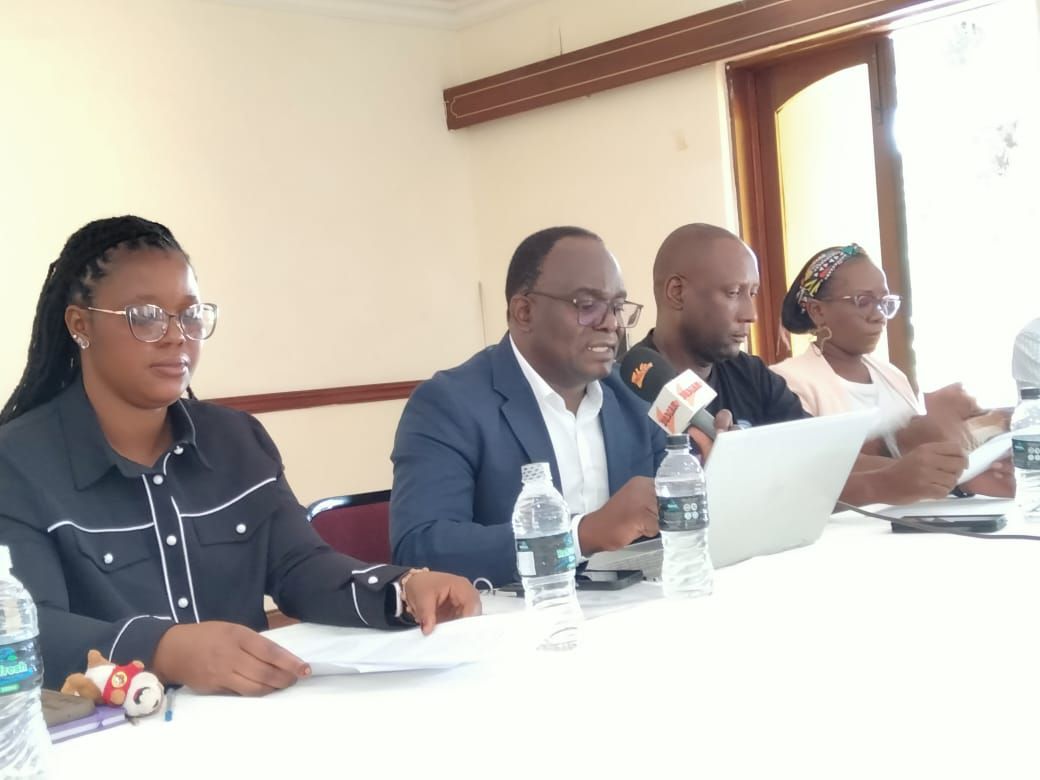
Addressing the media in Lilongwe on Thursday, HRDC chairperson Michael Kaiyatsa said the country is drifting into what he described as “a dangerous pattern of selective justice and economic cruelty,” where ordinary citizens are punished while those in power remain untouched.
Kaiyatsa said that since November last year, at least eight opposition politicians and former cabinet ministers have been arrested, while several high-profile corruption and abuse of office cases involving politically connected individuals have remained unresolved, stalled or completely ignored.
He said HRDC does not oppose lawful arrests, but warned that the recent trend points to a justice system that is being used as a political weapon rather than as a neutral guardian of the law.
“This is no longer about law enforcement. It is about intimidation, selective application of the law and political targeting. The rule of law cannot survive when arrests are determined by political convenience instead of evidence,” Kaiyatsa said.
The rights body also took aim at what it called “punitive economic policies,” accusing the government of imposing unbearable financial pressure on already struggling citizens through excessive taxation and skyrocketing tariffs for water, electricity and fuel.
HRDC said Malawians are being squeezed from every direction, with stagnant incomes, collapsing purchasing power and rising costs of basic services, while government continues to roll out new revenue measures without public consultation.
One of the most controversial policies, according to HRDC, is the Electronic Invoicing System (EIS), which the organisation says is being forced onto businesses without proper engagement or safeguards.
Kaiyatsa demanded that government immediately suspend the implementation of EIS and reopen talks with business operators to find a workable and fair compromise.
“You cannot build an economy by strangling small and medium businesses. EIS, in its current form, is not a reform tool; it is a punishment tool,” he said.
HRDC warned that if the current economic direction is not corrected, Malawi risks plunging deeper into poverty, unemployment and social unrest.
The organisation further cautioned that the combination of economic repression and selective justice is damaging Malawi’s international image, particularly among development partners who expect transparency, accountability and respect for democratic norms.
Kaiyatsa said donors are closely watching how government treats its own citizens and institutions, and warned that continued disregard for the rule of law could undermine trust, investment and future financial support.
“When citizens are poor, harassed and silenced, and when the law is applied only to the politically weak, the country does not look stable. It looks hostile to democracy and hostile to development,” he said.
HRDC concluded that the government is rapidly losing moral authority and public legitimacy, not because of opposition propaganda, but because of its own actions.
“The suffering of Malawians is not accidental. It is the direct result of bad decisions, arrogance in power and contempt for accountability. This country is not being governed in the interests of the people, but in the interests of control,” Kaiyatsa said.
Follow and Subscribe Nyasa TV :