

Malawi Moves to Trace Girls Reportedly Trapped in Russia
A storm is brewing over reports that Malawian girls are among hundreds of young African women allegedly trapped in Alabuga, a Russian military-industrial zone producing kamikaze drones used in the war against Ukraine.
The Human Rights Watch (HRW) Southern Africa office has confirmed it is consulting its Moscow-based counterparts to verify claims that Malawians were recruited under the so-called Alabuga Start programme — a scheme that promised work and study opportunities but is now under investigation for alleged human trafficking and forced labour.
HRW Senior Africa Researcher Idriss Ali Nassah told this publication that consultations are underway.
“We have requested our partner office that monitors the Russian conflict with Ukraine to provide details of what you are asking for,” Nassah said, stressing that HRW only comments publicly once its internal investigations are complete.
The Alabuga Start programme has come under intense global scrutiny following multiple investigative reports revealing that hundreds of young African and Asian women were lured to Russia with promises of scholarships, only to end up assembling Shahed drones in harsh factory conditions.
In Malawi, the revelation has triggered alarm among civil society and government institutions.
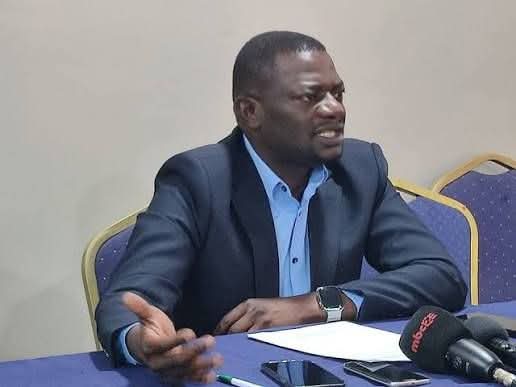
Human Rights Consultative Committee (HRCC) Chairperson Robert Mkwezalamba said his organisation has already engaged government ministries to verify the claims.
“We have discussed this with responsible ministers, but it appears even the government is not aware that some Malawian girls are trapped in a drone-making factory,” Mkwezalamba said.
While details about the Malawian victims remain unclear, sources within Parliament have confirmed that a motion is being drafted to formally raise the issue.
A legislator who spoke on condition of anonymity said lawmakers intend to demand answers on how the girls were recruited.
“We cannot keep quiet on this matter because it involves the lives of citizens. Those who aided their travel in the name of academic scholarships or job opportunities must be traced,” the MP said.
Human rights activist Benedicto Kondowe called for urgent reforms in Malawi’s labour export system, arguing that citizens seeking opportunities abroad must be protected from exploitation.
“We need a system where labour deals are conducted strictly between governments — as we saw with the recent Malawi–Israel Labour Export Deal,” Kondowe said. “This ensures accountability, transparency, and most importantly, the safety of Malawians abroad.”
The issue places Malawi in a diplomatic tight spot. Despite voting to condemn Russia’s invasion of Ukraine at the United Nations, Lilongwe continues to maintain cordial relations with Moscow, which donated 20,000 tonnes of fertilizer in 2023. Ukraine, on the other hand, extended humanitarian aid in 2024, sending 14,500 tonnes of maize to help the country cope with El Niño–induced food shortages.
Meanwhile, other Southern African countries — including Botswana, Namibia, and South Africa — have begun tracing their nationals trapped in Alabuga, working closely with embassies and Interpol to facilitate possible repatriations.
The scandal deepened after Malawi’s Ambassador to Russia, Joseph Mpinganjira, told the media last month that his office had received recruitment requests from Russia related to the Alabuga project.
An investigation by Bloomberg and other outlets found that Interpol in Botswana is already probing the Alabuga Start programme, which has been directly linked to the production of Shahed kamikaze drones used by Russian forces in Ukraine.
According to the Russian investigative outlet Protokol, Alabuga has recruited about 350 women from 40 countries since 2022 — with plans to expand to 8,500. The report lists two Malawian women among the 182 African and Asian recruits, alongside 46 from Uganda, 14 each from Kenya, Nigeria, Rwanda, and South Sudan, six from South Africa, four from Tanzania, Zambia, and Zimbabwe, and others from across the continent.
For now, the fate of the Malawian girls remains uncertain — but the pressure on authorities to act is growing by the day.
Follow and Subscribe Nyasa TV :