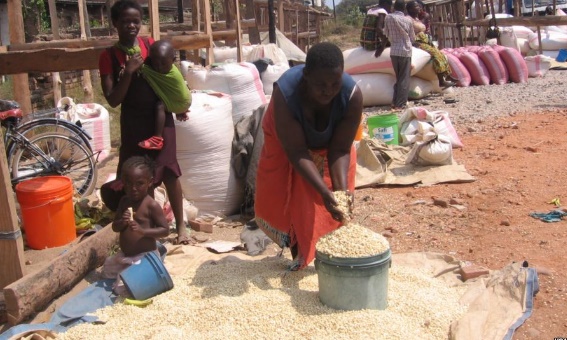
The National Food Reserve Agency (NFRA) has announced it will resume buying maize from farmers across Malawi, but at a new price of K840 per kilogram, down sharply from the K1,100/kg offered earlier this season. The agency says the move reflects falling maize prices nationwide, and that purchases will follow a first-come, first-served system, with a minimum sale of one metric tonne per transaction and strict quality standards.
Maize traders push up the price
At first glance, NFRA’s decision appears pragmatic and economically sound. By adjusting the price to match current market conditions, the agency is protecting public resources and ensuring taxpayer money is not spent on overvalued maize.
The insistence on quality standards guarantees that the national food reserves remain high-grade, while the structured, transparent purchasing system prevents favoritism and gives all eligible buyers a clear method to sell maize to NFRA.
For traders and larger farmers, the programme’s rules allow for efficient bulk sales, securing more maize for national reserves quickly and with minimal administrative hassle.
However, the benefits of NFRA’s approach come with significant downsides, particularly for smallholder farmers, who form the backbone of Malawi’s agricultural sector. The drastic reduction in price translates into much lower earnings, potentially undercutting the very farmers the programme is meant to support.
The minimum sale requirement of one metric tonne effectively shuts out small-scale producers, leaving them at the mercy of traders who may offer lower prices. Meanwhile, the first-come, first-served system may favor those with better transport or quicker access to depots, putting farmers in remote areas at a disadvantage. Critics also warn that the lack of publicly available data on the “market research” used to set the price fuels mistrust and leaves room for perceptions of inequity and mismanagement.
This development raises a broader question: how can Malawi balance fiscal responsibility and market realities with the livelihood needs of small farmers? NFRA’s price cut may protect the government and ensure quality stockpiles, but it risks alienating the very producers who supply the nation’s staple food, potentially undermining food security in the longer term.
The challenge lies in finding a middle ground where market discipline, public accountability, and social equity coexist. If the government can pair NFRA’s price adjustment with support for smallholders, such as transport assistance, cooperative aggregation, or staggered purchase options, the programme can achieve both economic efficiency and social fairness. Without such measures, the maize purchase programme risks being seen not as a tool for national food security, but as another blow to the small farmers who feed Malawi.
In the end, NFRA’s decision is technically sound but socially delicate. How the government manages the fallout for small-scale farmers will determine whether this move strengthens Malawi’s agricultural sector or deepens inequality in a country where maize is both food and lifeline.