

Chilima breaks the jinx 4 decades on: CCAP Nkhoma Synod hails Malawi veep
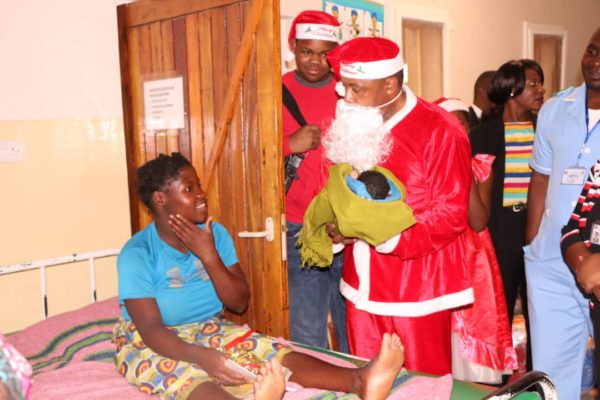
Santa Klaus Chilima carries newborn baby during the visit 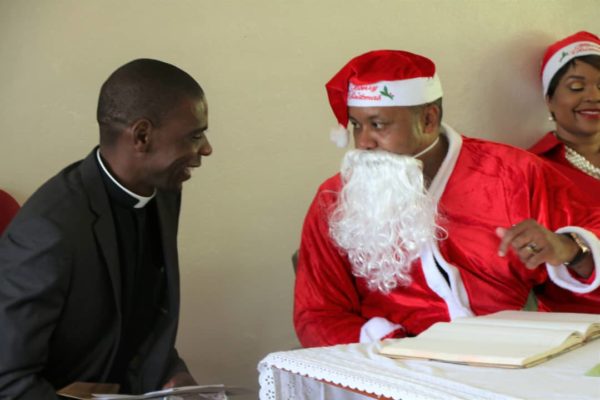

Reverend Vasco Kachipapa hails Chilima after the surprise Christmas visit
CCAP Nkhoma Synod general Secretary the Reverend Basco Kachipapa ha commended leader of the UTM Party who is also the Malawi’s vice president, Saulos Klaus Chilima, widely known by his initials SKC, for becoming the second most prominent citizen to visit Nkhoma Mission Hospital in Lilongwe during Christmas season. The country’s founding president Hastings Kamuzu Banda was the first.

Chilima visited the hospital to celebrate Christmas with the patients at the facility and was ‘stand-in-Santa’ as he donated gifts.
Reverend Kachipapa said the hospital was honoured to host a senior government since Kamuzu Banda’s days and that the visit was timely and helped patients in various forms.
“Since that time we have never received a senior government official and we are thankful for your visit today. It is a blessing to us. You have given us a wonderful Christmas gift which we have not received in a long time,” said Kachipapa.
Kamuzu Banda ruled Malawi from independence in 1961 to 1994 when his Malawi Congress Party (MCP) was ousted in the country’s first post-independence multiparty elections. He was an elder of Nkhoma Synod.
Clad in Santa ‘Klaus’ outfit, in the company of his wife Mary and their two children, Chilima arrived at the hospital at about 11:00 in the morning.
The hospital was founded by the Dutch Reformed Mission, now CCAP in 1915.
For over one hour the UTM leader alongside his family and party senior officials including the secretary general, Patricia Kaliati, toured the hospital’s 10 departments wile distributing gifts to the patients.
According to the hospital’s principal nursing officer Paul Mekani the hospital is serving the catchment population of 450 000.
“We have challenges which are affecting us. Government’s freezing of recruitment of staff is a big challenge to us,” said Mekani.
Meanwhile there are many nurses in the country who graduated from various training institutions but are yet to be employed.